Build a Referral Engine to Get Clients Consistently
April 23, 2026
Amelia Reed
5 minutes
Most freelancers think about referrals the wrong way. They treat them as lucky accidents, a happy byproduct of doing good work. And while good work is the foundation, it is never sufficient on its own. The freelancers who consistently grow through referrals are not just doing better work. They have built a system around it.
A referral engine is not complicated. It does not require a CRM, a marketing budget, or hours of weekly effort. It requires clarity about what you want, consistency in how you ask, and a few habits that keep you present in your clients' minds long after a project ends.
This guide walks through how to build one from scratch.
Why referrals outperform every other channel
Referrals are not just cheaper than paid acquisition. They are structurally different in ways that compound over time. When someone introduces you to a potential client, they are transferring a portion of their own credibility to you. That transferred trust does something no ad, cold email, or portfolio ever can: it removes the fundamental skepticism that makes early sales conversations difficult.
Built-in trust
The introduction carries credibility you cannot buy. Skepticism drops before you say a word.
Shorter sales cycles
Less convincing needed. Decisions happen faster because trust is already established.
Fewer objections
Price resistance drops when trust is high. Budget conversations go differently.
Higher retention
Referred clients stay longer and are more likely to refer others in turn.
A referral is not just a lead. It is a trust transfer. That is the only thing in business you genuinely cannot manufacture.
Why most freelancers do not get referrals
The problem is almost never quality of work. It is structure, or the absence of it. Referrals rarely happen spontaneously, even from clients who are genuinely delighted. They happen when conditions are created for them.
They never ask, assuming great work will automatically produce referrals on its own
They ask at the wrong time, when they need work rather than when satisfaction is highest
They are too vague, saying things like let me know if you know anyone with no specifics
They disappear after delivery, finishing strongly but then going completely silent
The core insight:
Referrals are not a reward for good work. They are a result of good systems. The freelancer with an average portfolio and a consistent referral process will outgrow the exceptional freelancer who leaves it to chance, every time.
The five-part referral engine
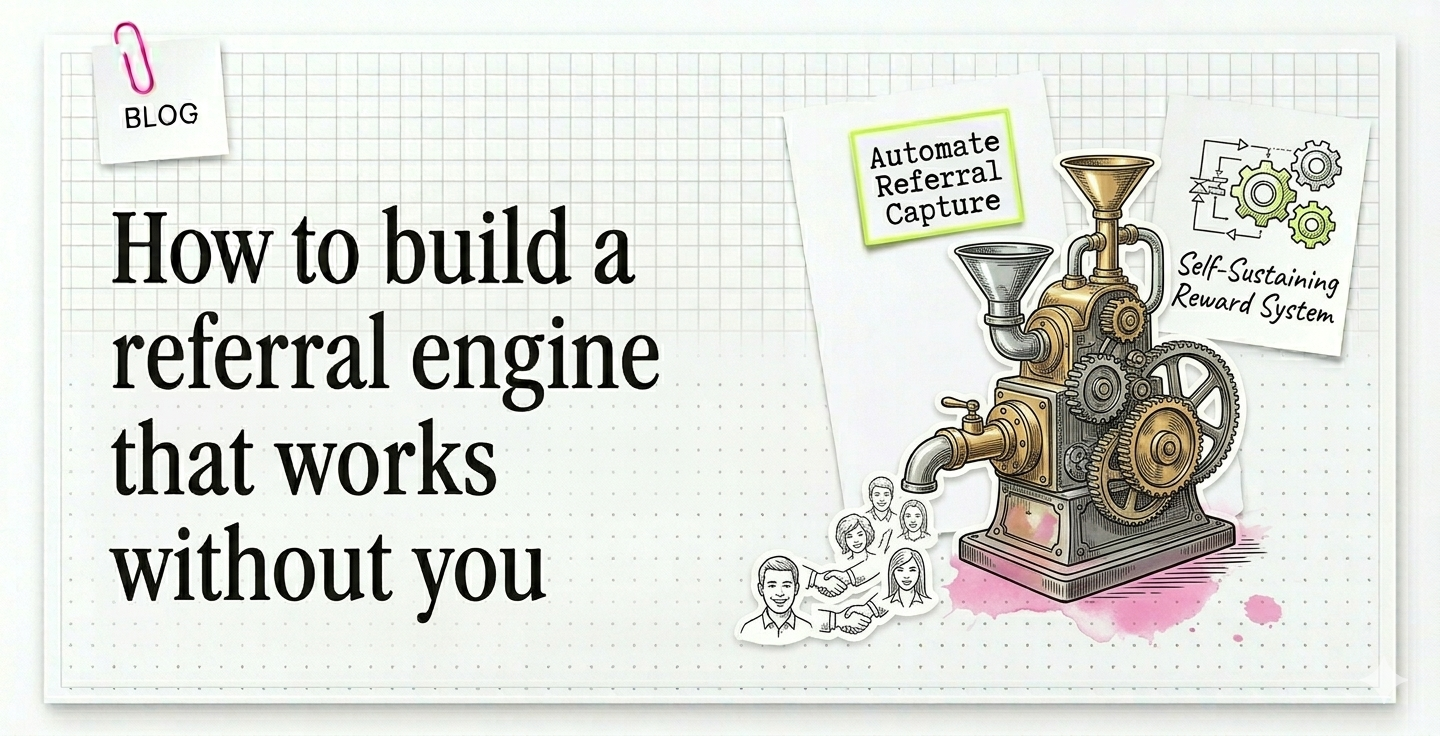
Each component below builds on the last. The engine only works if all five are in place. Skipping one is like removing a gear: the whole mechanism slows.
1
Deliver consistent results
Reliability creates referrals more than one-time brilliance. People refer when they trust you will make them look good. That trust comes from consistency across multiple touchpoints, not a single impressive moment.
Action: After every project, send a one-page results summary the client can share
2
Ask at the right moment
Timing matters more than wording. The ideal moment is immediately after a win: a successful delivery, strong feedback, a measurable milestone, or a spontaneous expression of appreciation. These are windows of maximum goodwill.
Action: Add a referral ask as a standard step in your project wrap-up checklist
3
Be specific about who you want
Vague asks produce vague results. Specific asks activate memory. When someone can picture the person you are looking for, they can find them. Write a single sentence describing your ideal referral and use it every time.
Action: Write your ideal referral sentence and keep it in your email signature
4
Stay visible without selling
When someone is asked who do you know who does X, the name that comes up is the one they have seen most recently. Visibility keeps you in the referral pool without requiring any direct selling.
Action: Send a quarterly update to past clients with a win, a lesson, or a useful resource
5
Close the loop every time
When someone refers you, three things must happen: thank them immediately, update them on progress, and let them know the outcome. People who feel appreciated refer again. People who get ghosted stop referring altogether.
Action: Create a simple template for referral thank-yous and send it within 24 hours
How to ask without feeling awkward
The discomfort most freelancers feel around asking for referrals comes from framing it as a favour rather than a natural part of a professional relationship. Reframe it: you are making it easy for someone who values your work to share that value with others. That is not a burden. It is a convenience.
Keep the ask direct, specific, and pressure-free. These work:
If you know someone who needs help with [specific thing], I would genuinely appreciate an introduction.
I am taking on two new clients in [timeframe]. If you know anyone looking for [service you provide], I would love to connect.
Who else in your network do you think is dealing with [the problem you solve]? I would be happy to have a quick call with them.
Notice the pattern: directness about what you want, specificity about who fits, and zero pressure on the outcome. You are making it easy for them to help, not asking them to do you a favour.
Turning past clients into ongoing referral sources
The most valuable people in your referral network are not your newest clients. They are the ones from two or three years ago who experienced excellent work, moved on, and are now embedded in networks full of people who need what you do.
Most freelancers have lost touch with these people entirely. Reconnecting is simpler than it feels:
Send a genuine check-in
Not a pitch. A simple note acknowledging the work you did together and asking how things have developed since.
Share something useful
A relevant article, a tool, an insight from recent work. Generosity without agenda reopens relationships naturally.
Stay lightly present
A quarterly update or occasional comment keeps you visible without requiring regular effort from either side.
The goal is not to sell to past clients. It is to remain part of their mental network so when they are asked for a recommendation, your name comes up naturally.
Why community accelerates everything
A referral network built person by person is powerful. A referral network embedded in a trusted community is exponentially more so. Communities create conditions that individual relationships cannot: shared context, repeated exposure, and the kind of social proof that makes introductions feel effortless rather than obligatory.
In a strong professional community, referrals happen in conversation, not pitches. They happen because someone mentions a problem and three people immediately say the same name. They happen because credibility is already established before anyone asks.
At Doerscircle, this is one of the most consistent patterns we observe among members who grow quickly. The community does not just provide networking opportunities. It creates the conditions in which referrals become a natural output of being known and trusted within a group.
Being part of the right community is one of the highest-leverage referral investments you can make.
The strongest referral networks are not built one conversation at a time. They are built by becoming known inside a community where trust already exists.
Three actions this week
The referral engine compounds over time. Every referral that is handled well becomes a node that can generate more referrals. But the compounding only starts when you take the first step. Start small, start now.
01
Reach out to one past client this week. Not to pitch. To reconnect and ask for a referral if the moment is right.
02
Write your ideal referral sentence. One specific sentence describing exactly who fits best. Keep it somewhere visible.
03
Add a referral step to your project close-out process. Make it automatic, not an afterthought.
Referrals do not happen by accident. They happen by design. Build the engine once, and it works for you indefinitely.
Most freelancers think about referrals the wrong way. They treat them as lucky accidents, a happy byproduct of doing good work. And while good work is the foundation, it is never sufficient on its own. The freelancers who consistently grow through referrals are not just doing better work. They have built a system around it.
A referral engine is not complicated. It does not require a CRM, a marketing budget, or hours of weekly effort. It requires clarity about what you want, consistency in how you ask, and a few habits that keep you present in your clients' minds long after a project ends.
This guide walks through how to build one from scratch.
Why referrals outperform every other channel
Referrals are not just cheaper than paid acquisition. They are structurally different in ways that compound over time. When someone introduces you to a potential client, they are transferring a portion of their own credibility to you. That transferred trust does something no ad, cold email, or portfolio ever can: it removes the fundamental skepticism that makes early sales conversations difficult.
Built-in trust
The introduction carries credibility you cannot buy. Skepticism drops before you say a word.
Shorter sales cycles
Less convincing needed. Decisions happen faster because trust is already established.
Fewer objections
Price resistance drops when trust is high. Budget conversations go differently.
Higher retention
Referred clients stay longer and are more likely to refer others in turn.
A referral is not just a lead. It is a trust transfer. That is the only thing in business you genuinely cannot manufacture.
Why most freelancers do not get referrals
The problem is almost never quality of work. It is structure, or the absence of it. Referrals rarely happen spontaneously, even from clients who are genuinely delighted. They happen when conditions are created for them.
They never ask, assuming great work will automatically produce referrals on its own
They ask at the wrong time, when they need work rather than when satisfaction is highest
They are too vague, saying things like let me know if you know anyone with no specifics
They disappear after delivery, finishing strongly but then going completely silent
The core insight:
Referrals are not a reward for good work. They are a result of good systems. The freelancer with an average portfolio and a consistent referral process will outgrow the exceptional freelancer who leaves it to chance, every time.
The five-part referral engine
Each component below builds on the last. The engine only works if all five are in place. Skipping one is like removing a gear: the whole mechanism slows.
1
Deliver consistent results
Reliability creates referrals more than one-time brilliance. People refer when they trust you will make them look good. That trust comes from consistency across multiple touchpoints, not a single impressive moment.
Action: After every project, send a one-page results summary the client can share
2
Ask at the right moment
Timing matters more than wording. The ideal moment is immediately after a win: a successful delivery, strong feedback, a measurable milestone, or a spontaneous expression of appreciation. These are windows of maximum goodwill.
Action: Add a referral ask as a standard step in your project wrap-up checklist
3
Be specific about who you want
Vague asks produce vague results. Specific asks activate memory. When someone can picture the person you are looking for, they can find them. Write a single sentence describing your ideal referral and use it every time.
Action: Write your ideal referral sentence and keep it in your email signature
4
Stay visible without selling
When someone is asked who do you know who does X, the name that comes up is the one they have seen most recently. Visibility keeps you in the referral pool without requiring any direct selling.
Action: Send a quarterly update to past clients with a win, a lesson, or a useful resource
5
Close the loop every time
When someone refers you, three things must happen: thank them immediately, update them on progress, and let them know the outcome. People who feel appreciated refer again. People who get ghosted stop referring altogether.
Action: Create a simple template for referral thank-yous and send it within 24 hours
How to ask without feeling awkward
The discomfort most freelancers feel around asking for referrals comes from framing it as a favour rather than a natural part of a professional relationship. Reframe it: you are making it easy for someone who values your work to share that value with others. That is not a burden. It is a convenience.
Keep the ask direct, specific, and pressure-free. These work:
If you know someone who needs help with [specific thing], I would genuinely appreciate an introduction.
I am taking on two new clients in [timeframe]. If you know anyone looking for [service you provide], I would love to connect.
Who else in your network do you think is dealing with [the problem you solve]? I would be happy to have a quick call with them.
Notice the pattern: directness about what you want, specificity about who fits, and zero pressure on the outcome. You are making it easy for them to help, not asking them to do you a favour.
Turning past clients into ongoing referral sources
The most valuable people in your referral network are not your newest clients. They are the ones from two or three years ago who experienced excellent work, moved on, and are now embedded in networks full of people who need what you do.
Most freelancers have lost touch with these people entirely. Reconnecting is simpler than it feels:
Send a genuine check-in
Not a pitch. A simple note acknowledging the work you did together and asking how things have developed since.
Share something useful
A relevant article, a tool, an insight from recent work. Generosity without agenda reopens relationships naturally.
Stay lightly present
A quarterly update or occasional comment keeps you visible without requiring regular effort from either side.
The goal is not to sell to past clients. It is to remain part of their mental network so when they are asked for a recommendation, your name comes up naturally.
Why community accelerates everything
A referral network built person by person is powerful. A referral network embedded in a trusted community is exponentially more so. Communities create conditions that individual relationships cannot: shared context, repeated exposure, and the kind of social proof that makes introductions feel effortless rather than obligatory.
In a strong professional community, referrals happen in conversation, not pitches. They happen because someone mentions a problem and three people immediately say the same name. They happen because credibility is already established before anyone asks.
At Doerscircle, this is one of the most consistent patterns we observe among members who grow quickly. The community does not just provide networking opportunities. It creates the conditions in which referrals become a natural output of being known and trusted within a group.
Being part of the right community is one of the highest-leverage referral investments you can make.
The strongest referral networks are not built one conversation at a time. They are built by becoming known inside a community where trust already exists.
Three actions this week
The referral engine compounds over time. Every referral that is handled well becomes a node that can generate more referrals. But the compounding only starts when you take the first step. Start small, start now.
01
Reach out to one past client this week. Not to pitch. To reconnect and ask for a referral if the moment is right.
02
Write your ideal referral sentence. One specific sentence describing exactly who fits best. Keep it somewhere visible.
03
Add a referral step to your project close-out process. Make it automatic, not an afterthought.
Referrals do not happen by accident. They happen by design. Build the engine once, and it works for you indefinitely.
Unlock a wealth of exclusive content
Join us and get unlimited access to a wealth of subscriber-only articles that cover a diverse range of topics, from industry trends and insights to expert tips and advice.
Once subscribed, you're also unlocking these benefits!
Leverage 120,000+ entrepreneurs for support and advice
Save time and effort with over 50 solutions for your business
Spotlight your business by getting featured on our platform
Contributors
Amelia Reed
Junior UX/UI Designer
Subscribe to our newsletter
No spam. Just the latest news and tips, interesting articles, and exclusive interviews in your inbox every month.
Thank you! Your submission has been received!
Oops! Something went wrong while submitting the form.
Contributors
Amelia Reed
Digital Marketeer
Subscribe to our newsletter
No spam. Just the latest news and tips, interesting articles, and exclusive interviews in your inbox every month.
Thank you! Your submission has been received!
Oops! Something went wrong while submitting the form.
Most freelancers think about referrals the wrong way. They treat them as lucky accidents, a happy byproduct of doing good work. And while good work is the foundation, it is never sufficient on its own. The freelancers who consistently grow through referrals are not just doing better work. They have built a system around it.
A referral engine is not complicated. It does not require a CRM, a marketing budget, or hours of weekly effort. It requires clarity about what you want, consistency in how you ask, and a few habits that keep you present in your clients' minds long after a project ends.
This guide walks through how to build one from scratch.
Why referrals outperform every other channel
Referrals are not just cheaper than paid acquisition. They are structurally different in ways that compound over time. When someone introduces you to a potential client, they are transferring a portion of their own credibility to you. That transferred trust does something no ad, cold email, or portfolio ever can: it removes the fundamental skepticism that makes early sales conversations difficult.
Built-in trust
The introduction carries credibility you cannot buy. Skepticism drops before you say a word.
Shorter sales cycles
Less convincing needed. Decisions happen faster because trust is already established.
Fewer objections
Price resistance drops when trust is high. Budget conversations go differently.
Higher retention
Referred clients stay longer and are more likely to refer others in turn.
A referral is not just a lead. It is a trust transfer. That is the only thing in business you genuinely cannot manufacture.
Why most freelancers do not get referrals
The problem is almost never quality of work. It is structure, or the absence of it. Referrals rarely happen spontaneously, even from clients who are genuinely delighted. They happen when conditions are created for them.
They never ask, assuming great work will automatically produce referrals on its own
They ask at the wrong time, when they need work rather than when satisfaction is highest
They are too vague, saying things like let me know if you know anyone with no specifics
They disappear after delivery, finishing strongly but then going completely silent
The core insight:
Referrals are not a reward for good work. They are a result of good systems. The freelancer with an average portfolio and a consistent referral process will outgrow the exceptional freelancer who leaves it to chance, every time.
The five-part referral engine
Each component below builds on the last. The engine only works if all five are in place. Skipping one is like removing a gear: the whole mechanism slows.
1
Deliver consistent results
Reliability creates referrals more than one-time brilliance. People refer when they trust you will make them look good. That trust comes from consistency across multiple touchpoints, not a single impressive moment.
Action: After every project, send a one-page results summary the client can share
2
Ask at the right moment
Timing matters more than wording. The ideal moment is immediately after a win: a successful delivery, strong feedback, a measurable milestone, or a spontaneous expression of appreciation. These are windows of maximum goodwill.
Action: Add a referral ask as a standard step in your project wrap-up checklist
3
Be specific about who you want
Vague asks produce vague results. Specific asks activate memory. When someone can picture the person you are looking for, they can find them. Write a single sentence describing your ideal referral and use it every time.
Action: Write your ideal referral sentence and keep it in your email signature
4
Stay visible without selling
When someone is asked who do you know who does X, the name that comes up is the one they have seen most recently. Visibility keeps you in the referral pool without requiring any direct selling.
Action: Send a quarterly update to past clients with a win, a lesson, or a useful resource
5
Close the loop every time
When someone refers you, three things must happen: thank them immediately, update them on progress, and let them know the outcome. People who feel appreciated refer again. People who get ghosted stop referring altogether.
Action: Create a simple template for referral thank-yous and send it within 24 hours
How to ask without feeling awkward
The discomfort most freelancers feel around asking for referrals comes from framing it as a favour rather than a natural part of a professional relationship. Reframe it: you are making it easy for someone who values your work to share that value with others. That is not a burden. It is a convenience.
Keep the ask direct, specific, and pressure-free. These work:
If you know someone who needs help with [specific thing], I would genuinely appreciate an introduction.
I am taking on two new clients in [timeframe]. If you know anyone looking for [service you provide], I would love to connect.
Who else in your network do you think is dealing with [the problem you solve]? I would be happy to have a quick call with them.
Notice the pattern: directness about what you want, specificity about who fits, and zero pressure on the outcome. You are making it easy for them to help, not asking them to do you a favour.
Turning past clients into ongoing referral sources
The most valuable people in your referral network are not your newest clients. They are the ones from two or three years ago who experienced excellent work, moved on, and are now embedded in networks full of people who need what you do.
Most freelancers have lost touch with these people entirely. Reconnecting is simpler than it feels:
Send a genuine check-in
Not a pitch. A simple note acknowledging the work you did together and asking how things have developed since.
Share something useful
A relevant article, a tool, an insight from recent work. Generosity without agenda reopens relationships naturally.
Stay lightly present
A quarterly update or occasional comment keeps you visible without requiring regular effort from either side.
The goal is not to sell to past clients. It is to remain part of their mental network so when they are asked for a recommendation, your name comes up naturally.
Why community accelerates everything
A referral network built person by person is powerful. A referral network embedded in a trusted community is exponentially more so. Communities create conditions that individual relationships cannot: shared context, repeated exposure, and the kind of social proof that makes introductions feel effortless rather than obligatory.
In a strong professional community, referrals happen in conversation, not pitches. They happen because someone mentions a problem and three people immediately say the same name. They happen because credibility is already established before anyone asks.
At Doerscircle, this is one of the most consistent patterns we observe among members who grow quickly. The community does not just provide networking opportunities. It creates the conditions in which referrals become a natural output of being known and trusted within a group.
Being part of the right community is one of the highest-leverage referral investments you can make.
The strongest referral networks are not built one conversation at a time. They are built by becoming known inside a community where trust already exists.
Three actions this week
The referral engine compounds over time. Every referral that is handled well becomes a node that can generate more referrals. But the compounding only starts when you take the first step. Start small, start now.
01
Reach out to one past client this week. Not to pitch. To reconnect and ask for a referral if the moment is right.
02
Write your ideal referral sentence. One specific sentence describing exactly who fits best. Keep it somewhere visible.
03
Add a referral step to your project close-out process. Make it automatic, not an afterthought.
Referrals do not happen by accident. They happen by design. Build the engine once, and it works for you indefinitely.
Most freelancers think about referrals the wrong way. They treat them as lucky accidents, a happy byproduct of doing good work. And while good work is the foundation, it is never sufficient on its own. The freelancers who consistently grow through referrals are not just doing better work. They have built a system around it.
A referral engine is not complicated. It does not require a CRM, a marketing budget, or hours of weekly effort. It requires clarity about what you want, consistency in how you ask, and a few habits that keep you present in your clients' minds long after a project ends.
This guide walks through how to build one from scratch.
Why referrals outperform every other channel
Referrals are not just cheaper than paid acquisition. They are structurally different in ways that compound over time. When someone introduces you to a potential client, they are transferring a portion of their own credibility to you. That transferred trust does something no ad, cold email, or portfolio ever can: it removes the fundamental skepticism that makes early sales conversations difficult.
Built-in trust
The introduction carries credibility you cannot buy. Skepticism drops before you say a word.
Shorter sales cycles
Less convincing needed. Decisions happen faster because trust is already established.
Fewer objections
Price resistance drops when trust is high. Budget conversations go differently.
Higher retention
Referred clients stay longer and are more likely to refer others in turn.
A referral is not just a lead. It is a trust transfer. That is the only thing in business you genuinely cannot manufacture.
Why most freelancers do not get referrals
The problem is almost never quality of work. It is structure, or the absence of it. Referrals rarely happen spontaneously, even from clients who are genuinely delighted. They happen when conditions are created for them.
They never ask, assuming great work will automatically produce referrals on its own
They ask at the wrong time, when they need work rather than when satisfaction is highest
They are too vague, saying things like let me know if you know anyone with no specifics
They disappear after delivery, finishing strongly but then going completely silent
The core insight:
Referrals are not a reward for good work. They are a result of good systems. The freelancer with an average portfolio and a consistent referral process will outgrow the exceptional freelancer who leaves it to chance, every time.
The five-part referral engine
Each component below builds on the last. The engine only works if all five are in place. Skipping one is like removing a gear: the whole mechanism slows.
1
Deliver consistent results
Reliability creates referrals more than one-time brilliance. People refer when they trust you will make them look good. That trust comes from consistency across multiple touchpoints, not a single impressive moment.
Action: After every project, send a one-page results summary the client can share
2
Ask at the right moment
Timing matters more than wording. The ideal moment is immediately after a win: a successful delivery, strong feedback, a measurable milestone, or a spontaneous expression of appreciation. These are windows of maximum goodwill.
Action: Add a referral ask as a standard step in your project wrap-up checklist
3
Be specific about who you want
Vague asks produce vague results. Specific asks activate memory. When someone can picture the person you are looking for, they can find them. Write a single sentence describing your ideal referral and use it every time.
Action: Write your ideal referral sentence and keep it in your email signature
4
Stay visible without selling
When someone is asked who do you know who does X, the name that comes up is the one they have seen most recently. Visibility keeps you in the referral pool without requiring any direct selling.
Action: Send a quarterly update to past clients with a win, a lesson, or a useful resource
5
Close the loop every time
When someone refers you, three things must happen: thank them immediately, update them on progress, and let them know the outcome. People who feel appreciated refer again. People who get ghosted stop referring altogether.
Action: Create a simple template for referral thank-yous and send it within 24 hours
How to ask without feeling awkward
The discomfort most freelancers feel around asking for referrals comes from framing it as a favour rather than a natural part of a professional relationship. Reframe it: you are making it easy for someone who values your work to share that value with others. That is not a burden. It is a convenience.
Keep the ask direct, specific, and pressure-free. These work:
If you know someone who needs help with [specific thing], I would genuinely appreciate an introduction.
I am taking on two new clients in [timeframe]. If you know anyone looking for [service you provide], I would love to connect.
Who else in your network do you think is dealing with [the problem you solve]? I would be happy to have a quick call with them.
Notice the pattern: directness about what you want, specificity about who fits, and zero pressure on the outcome. You are making it easy for them to help, not asking them to do you a favour.
Turning past clients into ongoing referral sources
The most valuable people in your referral network are not your newest clients. They are the ones from two or three years ago who experienced excellent work, moved on, and are now embedded in networks full of people who need what you do.
Most freelancers have lost touch with these people entirely. Reconnecting is simpler than it feels:
Send a genuine check-in
Not a pitch. A simple note acknowledging the work you did together and asking how things have developed since.
Share something useful
A relevant article, a tool, an insight from recent work. Generosity without agenda reopens relationships naturally.
Stay lightly present
A quarterly update or occasional comment keeps you visible without requiring regular effort from either side.
The goal is not to sell to past clients. It is to remain part of their mental network so when they are asked for a recommendation, your name comes up naturally.
Why community accelerates everything
A referral network built person by person is powerful. A referral network embedded in a trusted community is exponentially more so. Communities create conditions that individual relationships cannot: shared context, repeated exposure, and the kind of social proof that makes introductions feel effortless rather than obligatory.
In a strong professional community, referrals happen in conversation, not pitches. They happen because someone mentions a problem and three people immediately say the same name. They happen because credibility is already established before anyone asks.
At Doerscircle, this is one of the most consistent patterns we observe among members who grow quickly. The community does not just provide networking opportunities. It creates the conditions in which referrals become a natural output of being known and trusted within a group.
Being part of the right community is one of the highest-leverage referral investments you can make.
The strongest referral networks are not built one conversation at a time. They are built by becoming known inside a community where trust already exists.
Three actions this week
The referral engine compounds over time. Every referral that is handled well becomes a node that can generate more referrals. But the compounding only starts when you take the first step. Start small, start now.
01
Reach out to one past client this week. Not to pitch. To reconnect and ask for a referral if the moment is right.
02
Write your ideal referral sentence. One specific sentence describing exactly who fits best. Keep it somewhere visible.
03
Add a referral step to your project close-out process. Make it automatic, not an afterthought.
Referrals do not happen by accident. They happen by design. Build the engine once, and it works for you indefinitely.
Unlock a wealth of exclusive content
Join us and get unlimited access to a wealth of subscriber-only articles that cover a diverse range of topics, from industry trends and insights to expert tips and advice.
Learn how to run discovery calls that qualify clients, protect your expertise, and prevent free consulting sessions. Practical scripts and frameworks included.


.png)









.png)
.png)
.png)


.png)
.png)
.png)
.png)
.png)
